
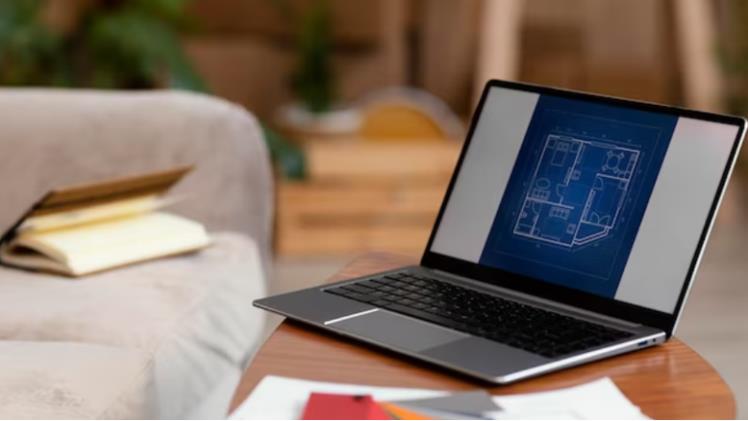
The digital era has revolutionized the way we plan and design spaces with the help of room planners. Thanks to new tools and technological approaches, we now have a wide range of resources that optimize the space planning process. From 3D modeling software to virtual reality applications, these room planner allow us to visualize and experience spaces virtually before we physically build them. In addition, technology gives us the ability to perform detailed analyses of energy efficiency, traffic flow, and space usage, which helps us make informed decisions and create more functional environments tailored to people’s needs. The digital age, supported by room planners, has opened up new possibilities in space planning, allowing us to explore and create innovative and efficient ways to design spaces. There is an infinite world of potential waiting to be discovered, and we’ll guide you through the most relevant aspects in this article.
The technological revolution in the planning and distribution of environments.
Technology is transforming the way we design and plan spaces, giving us unprecedented precision. With advanced tools such as 3D modeling and virtual reality, designers can visualize and explore every detail of an environment before its physical creation. This allows us to make precise adjustments and optimizations to the layout of spaces, considering factors such as functionality, aesthetics and ergonomics. In addition, the technology helps us simulate lighting, materials and traffic flows, ensuring that spaces are efficient and meet the needs of users. Technology is revolutionizing the planning and distribution of environments, allowing us to design with unparalleled precision.
Use of space in architectural design
Floor plan design is being revolutionized by technology, empowering intelligent planning and optimizing the use of space. With tools such as data analytics and artificial intelligence, architects can make comprehensive assessments of spatial needs, maximizing the efficiency and functionality of floor plan design and environments. By incorporating these advanced technologies, architects can create tailored floor plans that optimize the available space, ensuring a seamless integration of design elements and enhancing the overall user experience.
The integration of technology into floor plan design opens up new possibilities for creating innovative and optimized architectural solutions that align with the evolving demands of users. With technology as a powerful ally, architects can unlock the full potential of floor plan design and create spaces that are both aesthetically pleasing and highly functional.
Breaking barriers with virtual reality: The immersive experience revolutionizing the visualization of spaces
Virtual reality is taking space planning to a whole new level of immersion and understanding. This revolutionary technology allows us to immerse ourselves in virtual environments and explore them as if we were physically there. With virtual reality devices, we can walk through rooms, perceive the dimensions and layout of the space, and experience interaction with architectural elements. This provides a realistic and detailed perspective that helps designers make informed decisions and clients visualize the end result. Virtual reality is breaking down the barriers of imagination, allowing us to live and experience spaces before they become physical reality.
A new approach to architecture: Technology as an ally in the creation of functional and aesthetic spaces.
Today, technology has become an invaluable ally for architects in creating spaces that are both functional and aesthetically appealing. Thanks to advances in technological tools and approaches, a range of possibilities have opened up in architectural planning and design.
3D modeling and virtual reality are two key tools that have transformed the way we visualize and experience spaces. With 3D modeling, architects can create accurate digital representations of environments, allowing for a deeper understanding of the layout of space and the interaction between architectural elements. On the other hand, virtual reality immerses us in an immersive virtual environment, where we can walk through, explore and experience spaces before they are physically built.
In addition, the technology gives us the ability to perform detailed analysis of key aspects such as energy efficiency, traffic flow and space usage. This allows us to make informed decisions and optimize the functionality of spaces, creating environments that suit people’s needs and maximizing their comfort and productivity.
How to put it into practice?
To make the most of the possibilities that technology offers in architectural planning and design, it is important to adopt a strategic approach. First, it is essential to keep up to date on the latest tools and technological advances in the field. This involves exploring and becoming familiar with 3D modeling software, virtual reality applications and other relevant digital solutions.
In addition, it is essential to foster a mindset of experimentation and exploration. By using these technological tools, architects can test different configurations, materials and design styles, seeking optimal solutions that combine functionality and aesthetics.
It is also advisable to collaborate with technology experts, such as data analytics specialists and programmers, to take full advantage of the capabilities of artificial intelligence and data analytics in optimizing space use and energy efficiency.
In short, to effectively implement technology in the creation of functional and aesthetic spaces, it is necessary to stay current, experiment with available tools, and seek strategic collaborations. By doing so, architects will be able to take advantage of the full potential that technology offers and bring to life innovative and satisfying spaces for their users.
