
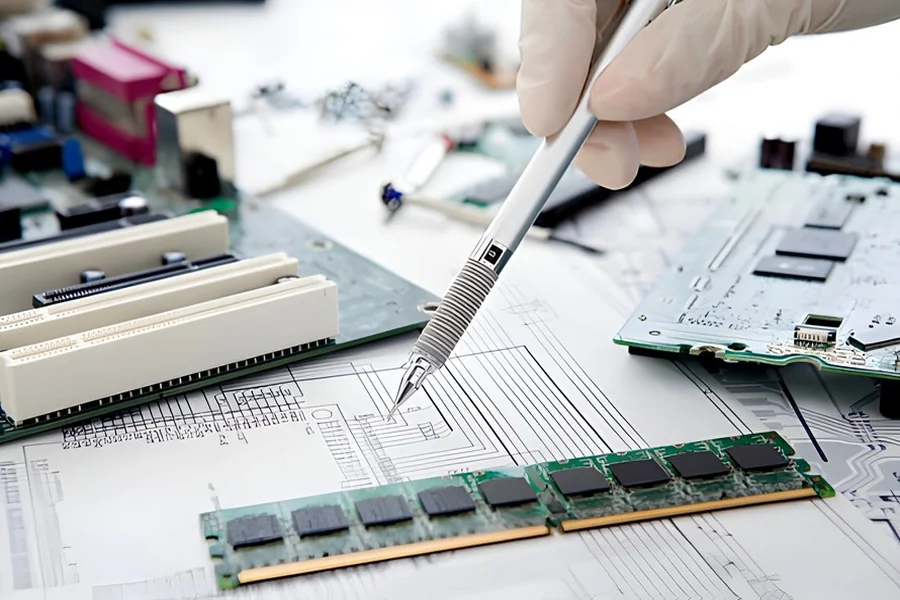
High volume PCB assembly refers to the large-scale production of printed circuit board assemblies designed to meet the demands of mass-market electronics. This manufacturing approach is optimized for producing thousands to millions of identical PCB units with consistent quality, stable performance, and predictable delivery schedules. High volume PCB assembly is widely used in industries where cost efficiency, repeatability, and speed are critical to commercial success.
Unlike prototype or low-volume production, high volume PCB assembly focuses on process automation, standardized workflows, and long production runs. The primary objective is to achieve the lowest possible cost per unit while maintaining strict quality control across every assembled board. This makes high volume PCB assembly essential for consumer electronics, automotive systems, industrial equipment, and communication devices.
Why High Volume PCB Assembly Is Essential for Growing Businesses
High volume PCB assembly supports businesses that have moved beyond product validation and are ready to scale manufacturing. As demand increases, manual or semi-automated processes are no longer efficient. High volume PCB assembly enables manufacturers to meet market demand without compromising quality or reliability.
Cost Optimization Through Scale
One of the most important advantages of high volume PCB assembly is cost reduction through economies of scale. Material sourcing, component procurement, and automated assembly processes significantly reduce per-unit costs. Large production runs allow manufacturers to negotiate better pricing for components and materials, making high volume PCB assembly a strategic choice for competitive markets.
Consistency and Repeatability
High volume PCB assembly relies on automated placement machines, controlled soldering profiles, and standardized inspection systems. These elements ensure that every PCB is assembled with the same level of precision, reducing variability and defects. Consistency is especially important for products that require uniform electrical performance across large batches.
High Volume PCB Assembly Process Overview
The high volume PCB assembly process is designed for efficiency, accuracy, and continuous operation.
Automated Component Placement
In high volume PCB assembly, advanced pick-and-place machines are used to position components at high speed and with micron-level accuracy. Automation minimizes human error and supports the rapid production rates required for large-scale manufacturing.
Optimized Soldering Techniques
Reflow soldering is carefully controlled during high volume PCB assembly to ensure reliable electrical connections. Temperature profiles are optimized for the specific PCB design and component mix, allowing solder joints to remain strong and consistent throughout long production cycles.
Material and Component Management in High Volume PCB Assembly
Effective material management is a core element of successful high volume PCB assembly.
Standardized PCB Materials
High volume PCB assembly typically uses standardized PCB substrates and finishes that are readily available and proven for mass production. These materials provide stable electrical properties and mechanical durability, which are essential for long-term performance.
Reliable Component Sourcing
Component availability plays a major role in high volume PCB assembly planning. Manufacturers focus on components with long lifecycle support to avoid supply disruptions. Stable sourcing ensures uninterrupted production and consistent quality across multiple manufacturing batches.
Quality Control in High Volume PCB Assembly
Despite the focus on speed and scale, quality remains a top priority in high volume PCB assembly.
In-Line Inspection Systems
Automated optical inspection systems are integrated directly into high volume PCB assembly lines. These systems detect placement errors, solder defects, and alignment issues in real time, allowing immediate corrective action.
Electrical and Functional Validation
High volume PCB assembly includes electrical testing to verify circuit integrity and functional performance. These tests confirm that each assembled board meets design specifications before it is approved for shipment.
Industries That Rely on High Volume PCB Assembly
High volume PCB assembly supports a wide range of industries where mass production is essential.
Consumer Electronics
Products such as smartphones, home appliances, and wearable devices depend heavily on high volume PCB assembly. High output capacity and cost efficiency allow manufacturers to meet global demand while maintaining competitive pricing.
Automotive and Industrial Applications
Automotive control units, power management systems, and industrial controllers require high volume PCB assembly to support large production volumes with consistent reliability. These applications demand stable performance even in harsh operating environments.
Design Considerations for High Volume PCB Assembly
Design plays a significant role in the success of high volume PCB assembly.
Design for Manufacturability
PCBs intended for high volume PCB assembly are optimized for automated production. Component spacing, panelization, and standardized footprints help improve assembly speed and reduce defect rates.
Long-Term Production Planning
High volume PCB assembly requires careful planning to support long product lifecycles. Design stability ensures that tooling, programming, and process optimization investments deliver long-term value.
Challenges in High Volume PCB Assembly
Although highly efficient, high volume PCB assembly comes with its own challenges.
Process Optimization
Maintaining efficiency over extended production runs requires constant monitoring and fine-tuning. High volume PCB assembly lines must be calibrated regularly to prevent drift in placement accuracy or solder quality.
Supply Chain Stability
Large-scale production depends on uninterrupted component supply. Any disruption can affect high volume PCB assembly schedules, making supply chain management a critical factor.
Future Trends in High Volume PCB Assembly
High volume PCB assembly continues to evolve with advancements in automation and digital manufacturing.
Smart Manufacturing Integration
Data-driven process control and real-time monitoring are becoming increasingly common in high volume PCB assembly. These technologies improve yield, reduce waste, and enhance traceability.
Higher Density and Miniaturization
As electronic products become smaller and more powerful, high volume PCB assembly must support increased component density without sacrificing reliability.
Conclusion
High volume PCB assembly is the foundation of scalable electronics manufacturing, enabling companies to produce large quantities of reliable, cost-effective PCB assemblies for global markets. By leveraging automation, standardized processes, and rigorous quality control, manufacturers can achieve consistent performance across massive production runs. Partnering with an experienced provider of PCB assembly in China allows businesses to benefit from advanced manufacturing infrastructure, competitive pricing, and dependable high-volume production capabilities that support long-term growth.
