
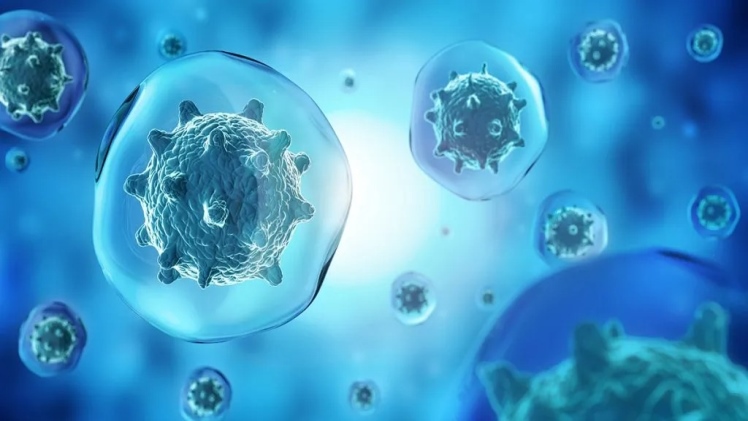
The Cell Theory, a fundamental pillar in biology, has undergone significant evolution since its inception in the 19th century. Over the years, groundbreaking experiments have challenged and reshaped this theory, illuminating new insights into the nature and functions of cells.
Microscopy Unveiling Cellular Structure
The initial stages of Cell Theory were rooted in advancements in microscopy. In the 17th century, Robert Hooke’s observations of cork under a primitive compound microscope laid the foundation. He coined the term “cell” based on the box-like structures he witnessed, though unaware of the living nature of cells. Later, Anton van Leeuwenhoek’s advancements in microscope technology allowed the observation of living cells, including blood cells and single-celled organisms, further solidifying the idea of cellular existence.
Schwann and Schleiden’s Contributions
The mid-19th century saw a pivotal moment with the contributions of Theodor Schwann and Matthias Schleiden. Schwann’s work on animal tissues and Schleiden’s studies on plant tissues independently concluded that all organisms were composed of cells. Their collaboration led to the formulation of the Cell Theory’s first two principles: that all living organisms are composed of cells and that the cell is the basic unit of life.
Spontaneous Generation Debate
However, challenges to the Cell Theory arose from the prevailing theory of spontaneous generation, which posited that life could emerge from non-living matter. Louis Pasteur’s experiments in the mid-19th century effectively debunked this notion. He demonstrated that microorganisms did not arise spontaneously but rather were introduced from the environment, solidifying the concept of biogenesis, further strengthening the Cell Theory’s foundation.
Köhler’s Discoveries: Mitochondria and Chloroplasts
The late 19th century witnessed significant strides as researchers delved deeper into cellular structures. Richard Altmann’s studies laid the groundwork for cell organelles. However, it was not until the early 20th century when Carl Benda and Richard Altmann introduced the terms “mitochondria” and “chloroplasts,” respectively. Later, Euglena’s discovery of chloroplasts provided tangible evidence supporting the existence of these organelles, augmenting the Cell Theory by recognizing cellular complexity.
Cell Division and Chromosomes
Advancements in cytology and genetics further transformed the Cell Theory. The elucidation of cell division by Walther Flemming in the late 19th century, coupled with Theodor Boveri and Walter Sutton’s work on the connection between chromosomes and heredity, revolutionized our understanding of cellular reproduction and inheritance. These discoveries underscored the significance of chromosomes in carrying genetic information from one generation to the next.
The Electron Microscope Revolution
The mid-20th century brought a technological marvel that unlocked a new realm of cellular exploration—the electron microscope. Ernst Ruska’s invention allowed scientists to delve deeper into cellular structures, revealing ultrastructural details previously unseen. The electron microscope’s high resolution led to discoveries of finer cellular components, reinforcing the complexity of cells beyond what was visible under light microscopes.
Cell Diversity and Specialization
The Cell Theory underwent a paradigm shift as studies by Santiago Ramón y Cajal and Camillo Golgi unveiled the diversity of cell types and their specialized functions. Their work on the nervous system highlighted the existence of various neuron types and their intricate connections, challenging the simplistic view of cells as uniform entities and emphasizing their specialization in complex organisms.
Contemporary Advances in Molecular Biology
The latter half of the 20th century witnessed a molecular revolution, propelling the Cell Theory into the realm of molecular biology. Discoveries in DNA structure by Watson and Crick, coupled with advancements in molecular techniques like PCR and genetic engineering, unraveled the molecular basis of cell function, revealing the intricate mechanisms governing cellular activities at the molecular level.
Conclusion: The Ever-Evolving Cell Theory
The Cell Theory, once a simple premise, has undergone an extraordinary transformation. From its humble beginnings with Hooke’s observations to the intricate molecular insights of the present day, each experiment and discovery has been a stepping stone, continually refining and expanding our understanding of cells. The journey from the concept of cells as mere compartments to the revelation of their dynamic and complex nature is a testament to the relentless pursuit of scientific inquiry and the evolution of human knowledge. As technology advances and new methodologies emerge, the Cell Theory will undoubtedly continue to evolve, paving the way for deeper insights into the essence of life itself.
