
Introduction:
Material durability is crucial in assuring the lifespan and dependability of an array of items across sectors. Thermal shock testing, which involves significant temperature fluctuations, is a way of determining material durability.
Among sophisticated thermal shock testing procedures, the three-zone thermal shock test stands out as a complete and exact approach for evaluating the strength and performance of materials.
In this article, let’s look at the salient components of three-zone thermal stress testing, including its significance, operational principles, technical specifications, and performance tvplutos indicators.
Understanding Thermal Shock Assessment:
Thermal shock testing is a technique used to determine how materials respond to sudden fluctuations in temperature. It is critical for products exposed to adverse weather conditions, such as electronics, automobile parts, and aeronautical materials.
The test involves exposing the material to drastic fluctuations in temperature between deadly hot and cold environments, generating the situations it could face during its operational life.
The Thermal Shock Test Chamber:
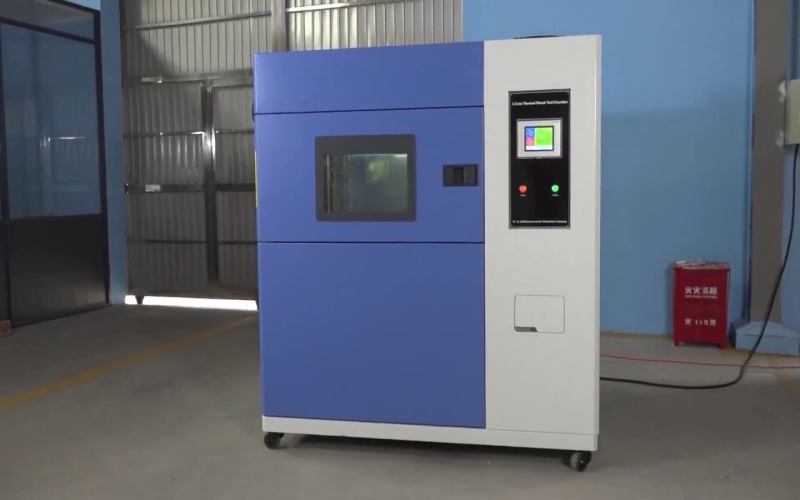
Temperature stress chambers like the Chiuvention thermal shock test chamber are essential in the thermal shock assessment process. This specialized chamber creates and maintains high-temperature changes in a regulated atmosphere.
The chamber has three zones: a heated zone, a cooled zone, and a transfer zone. Each zone has a distinct role to play in the testing process, ensuring a complete evaluation of the material’s durability. Three Zones and Their Working:
1. Hot Zone:
The hot zone is where the high-temperature exposure occurs. It replicates conditions that materials might face in extreme heat environments.
Heating elements in this zone raise the temperature quickly, and the material is exposed to the elevated temperature for a predetermined duration.
2. Cold Zone:
The cold zone is responsible for the low-temperature phase of the test. It simulates frigid conditions that materials may encounter in cold environments.
Cooling mechanisms, such as refrigeration systems, rapidly lower the temperature, subjecting the material to extreme cold for a specified time.
3. Transfer Zone:
The transfer zone serves as a bridge between the cold and the hot zone. It allows for the smooth movement of the test specimen from one extreme environment to the other.
Rapid transitions between the cold and the hot zones are facilitated in the transfer zone, generating the rapid shifts that materials may undergo during actual use.
Technical Parameters:
The efficacy and precision of three-zone thermal stress testing are determined by several technical parameters:
1. Temperature Range:
The capacity to reach and maintain a broad werdaan range of temperatures is essential. This parameter exposes the materials to extremes that are representative of real-world settings.
2. Transition Time:
Transition time is the time it takes for the test sample to travel from one zone to the next. Faster transitions improve test validity by closely reflecting actual usage conditions.
3. Stabilization Time:
Stabilization time is the time it takes for the material to establish thermal balance within each zone. This parameter guarantees that temperature exposure is exact and consistent.
4. Number of Cycles:
The number of cycles demonstrates the test’s dreamchaserhub repetition. Multiple cycles allow for a more thorough assessment of a material’s durability over some time.
Thermal Shock Test Chamber Performance Indicators:
Several crucial factors are taken into account while analyzing the efficacy of a thermal shock testing chamber. These indicators serve as barometers of the testing process’s performance and dependability. Let’s take a look at the four key variables that impact the quality and effectiveness of a thermal shock test chamber: reliability, uniformity, safety protocols, and ease of operation.
1. Reliability:
The capacity of a thermal shock test chamber to consistently precisely develop high-temperature changes is known as reliability. A reliable chamber yields predictable and stable results.
2. Uniformity:
Temperature uniformity across each zone is critical for a fair assessment. Temperature fluctuations can cause results to vary, lowering the test’s reliability.
3. Safety features:
Safety features are essential for assuring the security of the test sample and the testing environment. Safety elements such as rapid shut-off switches and temperature sensors help secure the testing process.
4. Ease of Operation:
A thermal shock test chamber should be easy to use, allowing technicians to easily program and run experiments. Effective controls and interfaces for users improve the testing process’s efficiency.
Conclusion:
Three-zone thermal shock analysis emerges as a solid and complete method for assessing material durability. This testing method provides essential information regarding a material’s durability and performance by replicating high-temperature variations noticed in real-world circumstances.
The thermal shock test chamber’s primary components, including the hot zone, cool zone, and transfer zone, work together to subject materials to harsh conditions. Technical parameters and performance indicators also add to the testing process’s accuracy and dependability.
As industries continue to push the boundaries of innovation, three-zone thermal shock testing is critical in guaranteeing the endurance and reliability of materials in a wide range of applications.
